Electricity is one of those invisible forces we rely on every single day, yet rarely stop to understand. We flip switches, charge devices, run appliances—and somewhere behind all of that activity lies a quiet measurement guiding it all: wattios.
It may sound technical, even obscure, but wattios is deeply woven into modern life. From the brightness of your room to the efficiency of entire cities, this simple concept plays a much bigger role than most people realize.
This article takes a closer look—not just at what wattios means, but why it matters, how it works, and how it is evolving in a world that is becoming increasingly conscious of energy use.
What Are Wattios, Really?
At its simplest, “wattios” is just another way of saying watts, the standard unit used to measure electrical power. The term is commonly used in languages like Spanish, but the concept remains universal.
A watt represents the rate at which energy is used or transferred. In practical terms, it tells you how much power a device needs to operate at any given moment.
Think of it like speed. Just as speed tells you how fast a car is moving, wattios tells you how fast energy is being consumed.
For example:
- A phone charger might use 5 to 20 wattios
- A ceiling fan might use 70 to 100 wattios
- An air conditioner could use over 1000 wattios
Each number reflects not total energy, but the instant rate of consumption.
The Formula Behind Wattios
Behind the simplicity lies a fundamental equation:
Power (Wattios) = Voltage × Current
- Voltage (V) is the pressure pushing electricity through a circuit
- Current (A) is the flow of electricity
Multiply the two, and you get power.
This relationship forms the backbone of electrical systems, from household wiring to industrial grids. It’s not just theory—it’s the foundation of how electricity behaves in the real world.
Why Wattios Matters More Than You Think
Most people only think about electricity when the bill arrives. But by then, the usage has already happened. Wattios, however, gives you a real-time window into that usage.
It answers questions like:
- How much power is being used right now?
- Which devices are consuming the most?
- Where is energy being wasted?
This immediate visibility is what makes wattios so powerful—not just as a measurement, but as a tool for awareness.
In a world where energy costs are rising and sustainability is becoming urgent, understanding wattios is no longer optional. It’s practical knowledge.
Wattios vs Energy: A Common Confusion
One of the most misunderstood aspects of electricity is the difference between power and energy.
- Wattios (Watts) measure power at a specific moment
- Kilowatt-hours (kWh) measure total energy over time
Here’s a simple way to think about it:
If wattios is the speed of a car, then kilowatt-hours is the total distance traveled.
For instance:
- A 100-watt device running for 10 hours uses 1 kilowatt-hour of energy
This distinction is crucial because electricity bills are based on energy consumption, not instantaneous power.
From Measurement to Insight: The Evolution of Wattios
For decades, wattios was just a number printed on devices. It told you how powerful something was—but not how it behaved in real life.
That has changed.
Today, wattios is at the center of a shift toward smart energy systems. Instead of static labels, we now have dynamic monitoring that shows how power is used in real time.
This transformation turns wattios from a passive unit into an active tool.
The Rise of Smart Energy Systems
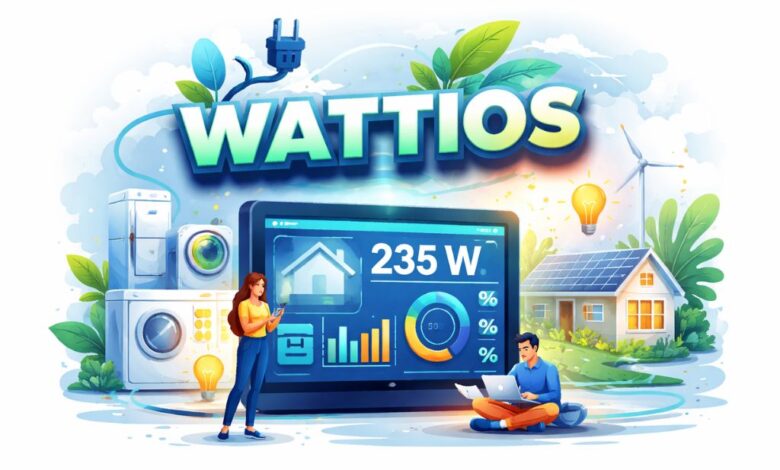
Modern homes and workplaces are increasingly equipped with technologies that track electricity usage down to the smallest detail.
These systems rely heavily on wattios data.
They can:
- Monitor energy use in real time
- Break down consumption by device
- Detect unusual patterns
- Suggest ways to reduce waste
What once required guesswork is now visible and measurable.
You don’t have to wonder why your electricity bill is high—you can see exactly what caused it.
How Wattios-Based Systems Work
Behind the scenes, these systems follow a simple but powerful process:
1. Data Collection
Sensors or smart meters measure wattios continuously across circuits and devices.
2. Analysis
Software processes this data to identify trends, peaks, and inefficiencies.
3. Visualization
Users see the information through dashboards or mobile apps, often in real time.
4. Action
Based on insights, users can adjust usage, automate systems, or turn devices off remotely.
This loop—measure, analyze, act—is what makes modern energy management so effective.
Everyday Applications of Wattios
Wattios is not limited to technical environments. It’s part of daily life in ways that often go unnoticed.
In Homes
- Choosing energy-efficient appliances
- Monitoring electricity usage
- Reducing unnecessary consumption
In Offices
- Managing operational costs
- Optimizing lighting and equipment usage
- Improving overall efficiency
In Industry
- Controlling large-scale machinery
- Preventing overloads
- Enhancing production efficiency
In Renewable Energy
- Tracking solar panel output
- Balancing energy generation and consumption
- Improving storage systems
Across all these settings, wattios serves as a common language for energy.
The Financial Impact of Understanding Wattios
Electricity is one of the few expenses that people often feel they can’t control. But wattios changes that perception.
By understanding power usage:
- You can identify high-consumption devices
- You can adjust habits to reduce waste
- You can invest in more efficient technologies
Even small changes—like switching to LED lighting or optimizing appliance usage—can lead to noticeable savings over time.
In larger setups, the impact can be significant.
Wattios and Sustainability
Energy consumption is directly linked to environmental impact. The more electricity we use, the more resources are required to produce it.
Wattios plays a key role in sustainability by:
- Making energy usage visible
- Encouraging efficient behavior
- Supporting renewable energy systems
When people understand how much power they use, they tend to use less of it. Awareness leads to action.
And at scale, those actions matter.
Safety and Reliability
Beyond cost and sustainability, wattios also contributes to safety.
Abnormal power usage can signal problems:
- Faulty wiring
- Overloaded circuits
- Malfunctioning appliances
Smart systems can detect these anomalies early, reducing the risk of damage or even fire.
In this sense, wattios is not just about efficiency—it’s about protection.
The Human Side of Energy Awareness
There’s something interesting that happens when people start paying attention to wattios.
Electricity stops being abstract.
Instead of a mysterious monthly bill, it becomes something tangible. You begin to notice patterns:
- Which devices run longer than expected
- How usage changes throughout the day
- Where small habits make a difference
This shift in perspective is subtle, but powerful.
It turns energy consumption into something you can understand—and control.
Challenges and Limitations
Despite its usefulness, wattios is not always easy for everyone to interpret.
Some challenges include:
- Lack of awareness or education
- Limited access to smart monitoring tools
- Difficulty translating data into action
Numbers alone don’t solve problems. They need context and understanding.
This is why user-friendly systems and clear visualizations are so important.
The Future of Wattios
As technology continues to evolve, the role of wattios is expanding.
We are moving toward a future where:
- Homes automatically optimize energy use
- Devices communicate with each other
- Energy systems adapt in real time
Artificial intelligence is also playing a role, helping predict usage patterns and suggest improvements before problems occur.
In this future, wattios won’t just measure energy—it will help manage it intelligently.
Final Thoughts
Wattios may seem like a small concept, but it carries significant weight. It sits quietly behind every powered device, every illuminated room, every running system.
Understanding it doesn’t require technical expertise—just curiosity.
Once you start paying attention, you begin to see electricity differently. Not as an invisible utility, but as something measurable, manageable, and even improvable.
In a world that is becoming more connected and more energy-conscious, wattios is more than a unit. It’s a key to understanding how we live—and how we can live better.