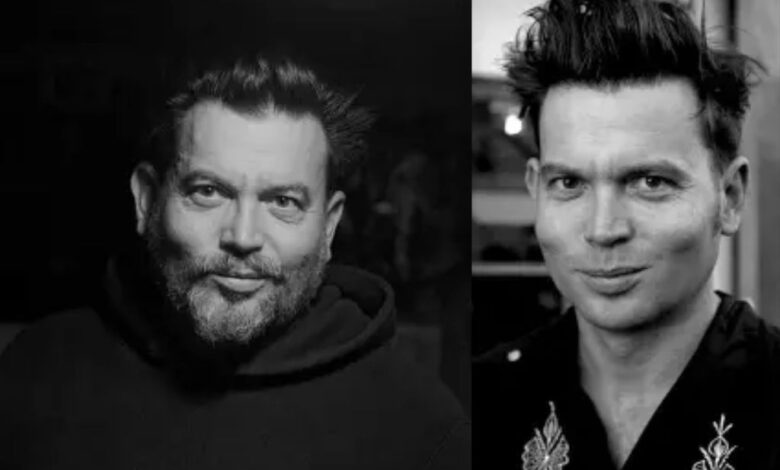
Toby Amies is a British filmmaker, broadcaster, and photographer whose career spans television, music journalism, and critically acclaimed documentary filmmaking. Known for his deeply immersive storytelling style and fascination with human psychology, Amies has carved out a unique space in contemporary documentary cinema. His work often blurs the line between observer and participant, resulting in films that feel personal, intimate, and emotionally raw.
From his early days in music television at MTV to directing internationally recognized documentaries such as The Man Whose Mind Exploded and In the Court of the Crimson King, Toby Amies has consistently explored unconventional subjects with sensitivity and artistic boldness. His career reflects a commitment to exploring identity, memory, creativity, and the complexities of the human experience.
Early Life and Academic Background
Toby Amies was born in 1967 in Birmingham, England, and grew up in Worcestershire. From a young age, he showed strong creative instincts and an interest in visual storytelling. Unlike many filmmakers who follow a traditional academic route into cinema, Amies’ journey was more exploratory and shaped by cultural curiosity rather than formal film training.
He studied at the University of Exeter and later attended the University of Kansas on an art history scholarship. However, rather than pursuing a conventional academic career, he gravitated toward media, broadcasting, and creative production. This decision marked the beginning of a non-linear but highly dynamic career path that would eventually lead him into television and documentary filmmaking.
Entry into Media and MTV Era
Toby Amies first gained public recognition through his work in music television during the 1990s. He joined MTV Europe and later MTV USA, where he worked as a presenter, producer, and creative contributor. This period was highly influential in shaping his artistic sensibilities.
At MTV, Amies became part of a vibrant global media environment where music, youth culture, and experimental television formats collided. He appeared in several MTV programs and contributed to shaping content that appealed to alternative and mainstream audiences alike. His roles included presenting music segments, interviewing artists, and working on production concepts that blended entertainment with cultural commentary.
During this time, he worked alongside well-known television personalities and built experience in live broadcasting, editorial production, and creative direction. The MTV era also exposed him to a wide range of musicians and artists, deepening his understanding of creative identity and performance—themes that would later become central in his documentary work.
Transition from Television to Filmmaking
After years in music television, Toby Amies gradually transitioned into filmmaking and photography. Unlike traditional filmmakers who move directly into scripted cinema, Amies came into documentary storytelling through a background in media experimentation and visual journalism.
His early film work focused on short-form projects, often commissioned by cultural institutions and broadcasters. He created content for organizations such as BBC, Sky Arts, Tate, and Nowness, developing a reputation for visually striking, concept-driven storytelling.
Photography also played a key role in this transition. As a portrait photographer, Amies developed a strong eye for composition, emotion, and character depth. His photographic work often reflects the same intimacy and psychological curiosity found in his films.
Breakthrough Documentary: The Man Whose Mind Exploded
Toby Amies’ major breakthrough as a filmmaker came with the documentary The Man Whose Mind Exploded. This film established him as a distinctive voice in modern documentary cinema.
The documentary follows the life of a man suffering from severe brain damage and memory loss. Rather than presenting a clinical or distant observation, Amies immerses himself in the subject’s world, creating a deeply personal and emotionally complex portrait.
What made the film especially powerful was its narrative structure and emotional honesty. Instead of treating the subject as a case study, Amies focused on human dignity, vulnerability, and identity fragmentation. The film received critical attention and was distributed in the UK and internationally, including on streaming platforms such as Netflix (US) and Film4 (UK).
This documentary solidified Amies’ reputation as a filmmaker who is unafraid to explore difficult psychological and emotional territories.
In the Court of the Crimson King: Music and Legacy
Another defining moment in Toby Amies’ career came with the documentary In the Court of the Crimson King, which focuses on the legendary progressive rock band King Crimson.
Unlike conventional music documentaries that rely heavily on performance footage and interviews, Amies approached the project as a philosophical exploration of creativity, control, and artistic evolution. The film examines the band’s complex history and its enigmatic leader, Robert Fripp, while also reflecting on broader questions about artistic discipline and creative identity.
The documentary was praised for its unconventional structure and intellectual depth. It avoided typical music-documentary clichés and instead presented a meditative exploration of artistic legacy and collaboration.
Through this film, Amies demonstrated his ability to handle culturally significant subjects while maintaining his signature introspective style.
Artistic Style and Filmmaking Philosophy
Toby Amies’ work is defined by a distinctive artistic approach that combines observational realism with emotional immersion. His films often feel like journeys into the minds of their subjects rather than traditional narratives.
Several key characteristics define his style:
1. Intimacy and Psychological Depth
Amies often builds close relationships with his subjects, allowing him to explore emotional and psychological layers that are rarely seen in mainstream documentaries.
2. First-Person Sensibility
Even when he is not physically present on screen, his perspective is strongly felt. His storytelling often reflects his own curiosity and emotional engagement.
3. Non-Traditional Structure
Rather than following linear storytelling, his films often unfold in fragmented, associative ways that mirror memory and thought processes.
4. Focus on Identity and Memory
Many of his works explore how identity is shaped, lost, or reconstructed—particularly in cases of illness, aging, or artistic transformation.
5. Visual Art Influence
His background in photography and visual arts is evident in his cinematic framing, composition, and use of light.
Work in Photography and Short Films
Beyond feature documentaries, Toby Amies has built a strong portfolio in photography and short-form filmmaking. His photographic work includes portraits of artists, musicians, and cultural figures, often emphasizing raw expression over polished presentation.
He has also created short films for major cultural organizations and institutions. These works often explore art, performance, and experimental visual storytelling. His collaborations with institutions such as Tate and BBC reflect his position within the broader cultural and artistic ecosystem.
Influence and Contribution to Documentary Cinema
Toby Amies occupies a unique position in modern documentary filmmaking. He does not fit neatly into commercial documentary trends or traditional journalistic frameworks. Instead, his work sits at the intersection of art cinema, psychological exploration, and cultural documentation.
His contribution can be understood in several ways:
- He expands the emotional range of documentary storytelling
- He challenges conventional narrative structures
- He brings a photographic sensibility to moving images
- He focuses on marginalized or complex human experiences
- He bridges music culture and philosophical inquiry
In doing so, Amies has influenced a generation of filmmakers interested in experimental documentary forms.
Legacy and Continuing Work
As of today, Toby Amies continues to work across film, photography, and creative media. His projects remain rooted in curiosity about human identity and artistic expression. Whether documenting musicians, individuals with extraordinary life experiences, or cultural phenomena, he maintains a consistent focus on depth and authenticity.
His evolving body of work suggests a filmmaker who is less interested in fame or commercial success and more committed to exploring meaningful human stories through innovative visual language.
Conclusion
Toby Amies stands out as a filmmaker who refuses to conform to conventional documentary boundaries. His journey from MTV presenter to internationally recognized documentary director reflects a career shaped by curiosity, experimentation, and artistic integrity.
Through films like The Man Whose Mind Exploded and In the Court of the Crimson King, he has proven his ability to transform complex human and artistic subjects into deeply engaging cinematic experiences. His work continues to challenge audiences to think differently about memory, identity, and creativity.
In an era where documentary filmmaking is often shaped by formulas and trends, Toby Amies remains a distinctive voice—one that prioritizes emotional truth and artistic exploration over convention.