Introduction
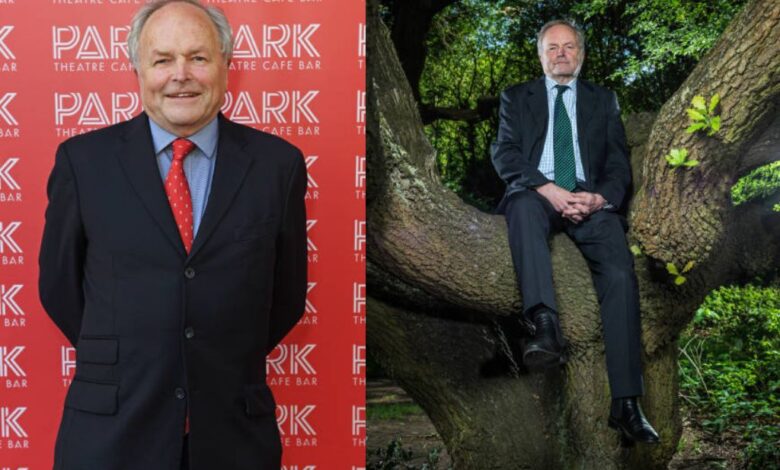
Clive Anderson is one of Britain’s most distinctive voices in entertainment—an unlikely but compelling blend of courtroom precision and comedic improvisation. Known for his razor-sharp wit, intellectual humor, and confident interviewing style, Anderson carved out a unique space in British media by moving seamlessly between law, stand-up comedy, television, and radio. From presiding over improvisational chaos on Whose Line Is It Anyway? to hosting thoughtful radio discussions, his career reflects both versatility and longevity.
Early Life and Background
Clive Stuart Anderson was born on December 10, 1952, in London, England. Raised in a middle-class household with a Scottish father and an English mother, Anderson grew up in an environment that valued education and intellectual curiosity. His early years were shaped by a blend of discipline and humor, traits that would later define his professional persona.
He attended Harrow County School for Boys, where he developed an interest in academics and communication. Although comedy was not initially his career goal, his natural wit and observational humor were evident even during his school years.
Education and Legal Foundations
Anderson pursued law at Selwyn College, Cambridge, one of the constituent colleges of the prestigious University of Cambridge. During his time there, he became actively involved in the famous Cambridge Footlights, a breeding ground for some of Britain’s most successful comedians and writers.
Serving as President of the Footlights, Anderson sharpened his comedic instincts and developed performance skills that would later define his career. Despite this growing passion for entertainment, he remained committed to his legal studies and qualified as a barrister in 1976.
For approximately 15 years, Anderson practiced criminal law in London. His legal background instilled in him a sharp analytical mind, a calm demeanor under pressure, and a mastery of language—all qualities that would later translate seamlessly into broadcasting.
Transition into Comedy
While working as a barrister, Anderson began writing comedy scripts and performing stand-up in his spare time. The late 1970s and early 1980s marked a turning point as he became involved with London’s emerging alternative comedy scene.
He was among the early performers at The Comedy Store, a venue that helped launch the careers of many influential comedians. His style—intellectual, dry, and slightly irreverent—stood out in a landscape dominated by more traditional comedic approaches.
Anderson also contributed as a writer to popular British comedy programs, including Not the Nine O’Clock News, working alongside notable figures such as Mel Smith and Griff Rhys Jones. These experiences solidified his reputation as a sharp comedic mind behind the scenes.
Breakthrough with Whose Line Is It Anyway?
Anderson’s major breakthrough came with Whose Line Is It Anyway?, which began as a radio show before transitioning to television. As the host, Anderson played the role of a witty moderator, guiding performers through a series of improvisational games.
His quick thinking, sarcastic remarks, and ability to maintain control over unpredictable comedic situations made him the perfect anchor for the show. Unlike traditional hosts, Anderson was not merely a facilitator; he was an active participant, often delivering some of the funniest lines himself.
The show became a cultural phenomenon, earning critical acclaim and a loyal fan base. It also introduced audiences to a new form of comedy centered on spontaneity and creativity.
Television Career and Talk Shows
Following the success of Whose Line Is It Anyway?, Anderson expanded into talk shows, hosting Clive Anderson Talks Back and later Clive Anderson All Talk.
These programs showcased his interviewing style—intelligent, probing, and often provocatively humorous. Anderson was unafraid to challenge his guests, leading to memorable and sometimes controversial moments. One of the most famous incidents involved the Bee Gees, who walked off his show after a tense exchange.
Beyond his own shows, Anderson became a regular guest and panelist on British television, appearing on programs such as Have I Got News for You and QI. His presence brought a blend of humor and intellectual depth to these formats.
Radio Career and Intellectual Broadcasting
In addition to television, Anderson built a strong presence in radio. He has long been associated with BBC Radio 4, where he hosts the arts and entertainment program Loose Ends.
He also presents Unreliable Evidence, a legal discussion show that draws on his background as a barrister. Through this program, Anderson explores complex legal issues in an accessible and engaging manner, bridging the gap between professional expertise and public understanding.
His radio work highlights a different side of his personality—thoughtful, inquisitive, and deeply informed—demonstrating his ability to engage audiences beyond comedy.
Writing and Creative Contributions
Anderson’s contributions extend into writing, where he has worked on scripts for prominent comedians and contributed to various publications. His writing style mirrors his on-screen persona: sharp, articulate, and subtly humorous.
He has written for notable performers such as Frankie Howerd, further cementing his reputation within the comedy industry. His ability to craft intelligent humor has made him a respected figure among peers and critics alike.
Awards and Recognition
Over the course of his career, Anderson has received numerous accolades. Whose Line Is It Anyway? won a BAFTA Award, reflecting its cultural and artistic impact. Additionally, Anderson himself received a British Comedy Award in 1991 for his contributions to entertainment.
In recognition of his achievements, he was named an honorary fellow of Selwyn College, Cambridge, highlighting the enduring connection between his academic roots and professional success.
Personal Life
Clive Anderson is married to Jane Anderson, a physician, and the couple has three children. Despite his public career, Anderson has maintained a relatively private personal life, choosing to keep family matters out of the spotlight.
He is also known for his interest in football, supporting clubs such as Arsenal and Rangers.
Environmental and Charitable Work
Beyond entertainment, Anderson is actively involved in environmental causes. He serves as president of the Woodland Trust, an organization dedicated to protecting and restoring woodland areas across the United Kingdom.
His involvement reflects a commitment to social responsibility and sustainability, adding another dimension to his public persona.
Style, Personality, and Legacy
Clive Anderson’s style is characterized by intelligence, wit, and a willingness to challenge conventions. Unlike many entertainers, he does not rely on exaggerated performances or gimmicks. Instead, his humor emerges from observation, language, and timing.
His legal background gives him a unique edge, allowing him to approach interviews and discussions with precision and confidence. At the same time, his experience in comedy ensures that his delivery remains engaging and entertaining.
Anderson’s legacy lies in his ability to bridge different worlds—law and entertainment, intellect and humor, structure and improvisation. He has influenced a generation of broadcasters and comedians, proving that intelligence and comedy can coexist in powerful ways.
Conclusion
Clive Anderson stands as a multifaceted figure in British media—a barrister turned comedian, a host who challenges as much as he entertains, and a broadcaster who seamlessly blends humor with intellect. His journey from the courtroom to the stage and studio is a testament to adaptability, creativity, and enduring relevance.
Whether guiding improvisational performers, interviewing high-profile guests, or discussing legal issues on radio, Anderson continues to demonstrate a rare ability to engage audiences with both wit and substance. His career is not just a story of success but a reflection of how diverse talents can converge to create something truly unique.