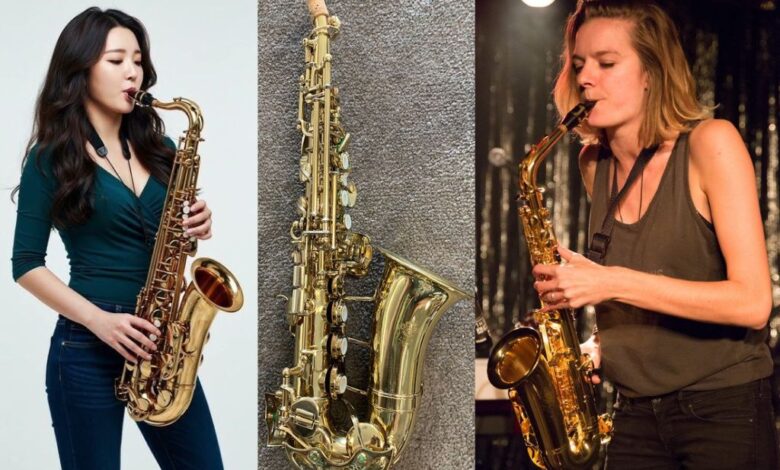
In the vast, expressive world of musical instruments, size rarely determines impact. Some of the smallest creations produce the most striking sounds, and few instruments embody this paradox better than the sopranino saxophone. Often overlooked, sometimes misunderstood, and almost always intriguing, the sopranino occupies a rare space in music—a place where technical mastery meets sonic brilliance.
For many listeners, the saxophone conjures images of smoky jazz clubs, soulful melodies, and the warm tones of alto or tenor players. Yet beyond these familiar voices lies a lesser-known member of the family: a slender, high-pitched instrument capable of cutting through ensembles with dazzling clarity. The sopranino saxophone is not just a curiosity; it is a testament to innovation, precision, and the endless possibilities of sound.
Origins: The Vision of Adolphe Sax
To understand the sopranino saxophone, one must begin with its creator, Adolphe Sax, the visionary Belgian instrument maker who revolutionized music in the 19th century. In the 1840s, Sax set out to design a new family of instruments that would bridge the tonal gap between woodwinds and brass. His goal was ambitious: to create instruments powerful enough for military bands yet flexible enough for orchestral use.
The result was the saxophone family—a range of instruments varying in size and pitch, all sharing a single-reed mouthpiece and a conical bore. Among these designs was the sopranino saxophone, typically pitched in E♭. Though included in Sax’s original concept, the sopranino did not immediately gain traction. Its extreme pitch and technical demands made it less practical for widespread use compared to larger saxophones.
It would take decades before the instrument began to appear in more formal production, primarily in the early 20th century. Even then, it remained a specialty instrument, produced in smaller quantities and used in more niche musical settings.
Design: Small Frame, Complex Craftsmanship
At first glance, the sopranino saxophone appears almost toy-like. Its slim, straight body and compact size set it apart from the curved silhouettes of its larger relatives. Roughly comparable in length to a clarinet, it is typically constructed from brass and finished with lacquer or plating, just like other saxophones.
Yet beneath its modest appearance lies a surprisingly complex instrument. The sopranino features a fully developed key system, allowing for a wide range of notes and expressive techniques. However, the reduced spacing between keys presents a unique challenge. Players must navigate a tightly packed layout, requiring precision in finger placement and coordination.
Unlike larger saxophones, the sopranino often lacks a detachable neck. The mouthpiece attaches directly to the body, further emphasizing its compact design. This structural simplicity contributes to its direct and immediate sound production, but it also leaves little room for error in playing technique.
The instrument’s small size also influences its physical response. It reacts quickly to airflow, making it highly sensitive to changes in breath support and embouchure. For experienced players, this responsiveness can be a powerful expressive tool. For beginners, it can be unforgiving.
The Sound: Bright, Piercing, and Unmistakable
If the sopranino saxophone has a defining characteristic, it is undoubtedly its sound. Tuned in E♭, it produces pitches significantly higher than the soprano saxophone, placing it among the highest voices in the saxophone family.
Its tone is often described as bright, penetrating, and even piercing. In ensemble settings, the sopranino can easily rise above other instruments, cutting through dense textures with remarkable clarity. This makes it particularly effective in situations where a distinct, high-register voice is needed.
However, the instrument’s sound is not limited to sharp brilliance. In the hands of a skilled musician, the sopranino can produce surprisingly delicate and lyrical tones. Its upper register can shimmer with a light, almost ethereal quality, adding a unique color to musical compositions.
This dual nature—capable of both intensity and subtlety—is part of what makes the sopranino so compelling. It demands control, but it rewards mastery with a voice unlike any other.
Technical Challenges: An Instrument for Experts
The sopranino saxophone is widely regarded as one of the most challenging members of the saxophone family. Its high pitch amplifies even the smallest imperfections in technique, making intonation particularly difficult to control.
Embouchure—the way a player shapes their mouth around the mouthpiece—is critical. Because of the instrument’s sensitivity, slight variations in pressure or positioning can cause noticeable changes in pitch and tone. Breath control is equally important, as the sopranino requires a steady and precise airflow.
Finger technique also plays a significant role. The compact key layout demands agility and accuracy, especially in fast passages. For players accustomed to larger saxophones, adjusting to the sopranino can feel like learning a new instrument altogether.
For these reasons, the sopranino is rarely recommended for beginners. Most musicians approach it only after developing strong fundamentals on instruments such as the alto or soprano saxophone. Even then, mastering the sopranino can take years of dedicated practice.
Musical Roles: From Classical Stages to Avant-Garde Jazz
Despite its challenges, the sopranino saxophone has carved out a niche in various musical genres. In classical music, it appears occasionally in orchestral and chamber works, often used to add a distinctive high-register color.
One of the most notable associations is with the composition Boléro by Maurice Ravel. While the piece is more commonly performed with a soprano saxophone today, its connection to higher-pitched saxophones highlights the role such instruments can play in orchestral textures.
In the world of jazz, the sopranino has found a more experimental home. Musicians like Anthony Braxton have embraced its unique sound, using it to explore new sonic landscapes. Its ability to produce unconventional tones and extended techniques makes it ideal for avant-garde and free jazz contexts.
The instrument is also used in saxophone ensembles, where its high range complements the lower voices of alto, tenor, and baritone saxophones. In these settings, it often serves as a soprano-like lead voice, adding brilliance and contrast to the group’s overall sound.
Rarity and Appeal: Why It Remains Uncommon
Given its distinctive qualities, one might wonder why the sopranino saxophone is not more widely used. The answer lies in a combination of practical and musical factors.
First, its technical difficulty limits its accessibility. Many players prefer to focus on more versatile instruments that offer broader opportunities for performance and employment. The sopranino’s specialized nature means it is often reserved for specific musical contexts.
Second, the repertoire for the instrument is relatively limited. While there are compositions that feature the sopranino, they are far fewer than those written for alto or tenor saxophones. This lack of material further contributes to its niche status.
Finally, its sound—while unique—is not always suitable for mainstream genres. The brightness and intensity that make the sopranino stand out can also make it challenging to blend in certain musical settings.
Yet it is precisely these qualities that give the instrument its appeal. For musicians seeking something different, something bold and unconventional, the sopranino offers an opportunity to stand apart.
Craftsmanship and Modern Production
Today, the sopranino saxophone continues to be produced by a select group of manufacturers. These instruments are often crafted with a high level of precision, reflecting their specialized nature.
Modern sopraninos benefit from advancements in manufacturing techniques, resulting in improved intonation, ergonomics, and overall playability. While still challenging, they are more accessible than earlier models.
Despite this progress, the instrument remains relatively rare. It is typically found in the hands of dedicated enthusiasts, professional musicians, and collectors who appreciate its unique characteristics.
The Sopranino in Contemporary Music
In recent years, there has been a growing interest in expanding the boundaries of musical expression. As composers and performers seek new sounds, the sopranino saxophone has gained renewed attention.
Its ability to produce extreme high pitches makes it an attractive choice for contemporary classical compositions. It is also being explored in electronic and experimental music, where its distinctive tone can be manipulated and transformed in innovative ways.
This resurgence suggests that the sopranino’s story is far from over. While it may never achieve mainstream popularity, it continues to inspire creativity and push the limits of what is possible in music.
Conclusion: A Small Instrument with Endless Possibilities
The sopranino saxophone is a reminder that music is not defined by convention. It challenges players to refine their technique, encourages composers to think beyond traditional boundaries, and offers listeners a sound that is both rare and captivating.
From its origins in the workshop of Adolphe Sax to its role in modern experimental music, the sopranino has remained a symbol of innovation. It may be small in size, but its voice carries far—bright, bold, and unmistakably unique.
In a world filled with familiar sounds, the sopranino saxophone stands as an invitation to explore something different. For those willing to embrace its challenges, it offers not just an instrument, but an entirely new way of hearing music.