In the world of fashion design and garment construction, details define quality. Among these details, few are as essential yet often overlooked as nahttypen. While fabrics, patterns, and silhouettes tend to dominate discussions, the type of seam used in a garment plays a critical role in determining its durability, comfort, and aesthetic appeal. From high-end couture to everyday clothing, the choice of seam can transform a simple piece into a well-crafted product.
This article explores nahttypen in depth, offering a comprehensive understanding of their importance, variations, applications, and role in both traditional and modern sewing practices.
Understanding Nahttypen: The Foundation of Sewing
The term nahttypen originates from German and translates directly to “types of seams.” In practical terms, it refers to the various methods used to join two or more pieces of fabric together. Each seam type has its own structure, function, and visual outcome.
Seams are not merely functional connections; they are structural elements that influence how a garment behaves under stress, how it feels on the body, and how it appears both inside and out. A poorly chosen seam can lead to discomfort, fraying, or even garment failure, while a well-selected seam enhances longevity and finish.
The Role of Nahttypen in Garment Quality
When evaluating clothing quality, professionals often turn garments inside out to inspect the seams. This simple act reveals a great deal about craftsmanship. The selection of appropriate nahttypen ensures that:
- Fabric edges are secured against fraying
- Stress points are reinforced
- The garment maintains its shape over time
- The interior finish is clean and professional
In high-quality garments, seams are carefully chosen based on fabric type, garment function, and design intent. This thoughtful selection distinguishes premium construction from mass-produced alternatives.
The Classic Plain Seam: Simplicity and Versatility
Among all nahttypen, the plain seam is the most fundamental. It involves placing two pieces of fabric together, typically right sides facing, and stitching along the edge. Once sewn, the seam allowances are pressed open or to one side.
This seam is widely used in everyday clothing due to its simplicity and efficiency. It forms the backbone of most sewing projects, from basic tops to structured dresses. However, because the raw edges remain exposed, additional finishing techniques such as zigzag stitching or overlocking are often required to prevent fraying.
Despite its simplicity, the plain seam remains indispensable. Its adaptability makes it suitable for a wide range of fabrics and garment types, especially when combined with finishing methods.
The French Seam: Elegance in Construction
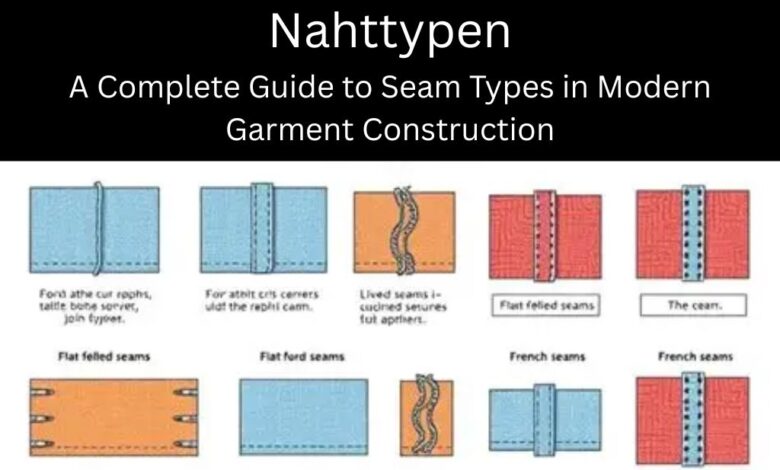
The French seam represents refinement among nahttypen. Designed to enclose raw edges within the seam itself, it creates a clean and polished interior. This technique involves sewing the fabric twice—first with wrong sides together and then with right sides together—effectively hiding all raw edges.
This seam is particularly popular in garments made from lightweight or delicate fabrics such as silk, chiffon, or fine cotton. In these materials, traditional seam finishes may appear bulky or unattractive, making the French seam an ideal solution.
Beyond its aesthetic appeal, the French seam also enhances durability for delicate fabrics. By protecting the edges, it reduces wear and tear, ensuring that the garment maintains its integrity over time.
The Flat-Felled Seam: Strength and Durability
When strength is a priority, the flat-felled seam stands out among nahttypen. Commonly found in denim jeans and workwear, this seam is known for its robustness and resistance to stress.
The construction involves folding one seam allowance over the other and stitching it down, creating a flat, enclosed seam with visible topstitching. This double layer of stitching reinforces the seam, making it ideal for garments subjected to frequent movement or heavy use.
In addition to its strength, the flat-felled seam offers a clean finish on both sides of the fabric. This dual-sided neatness makes it suitable for unlined garments where the interior may be visible.
Overlock Seams: Efficiency in Modern Manufacturing
With the rise of industrial sewing, overlock seams have become a cornerstone of modern nahttypen. Created using an overlock machine, this seam simultaneously stitches, trims, and finishes fabric edges.
Overlock seams are especially valuable for knit and stretch fabrics. Their elasticity allows the garment to move with the wearer without breaking the seam. This flexibility makes them ideal for sportswear, activewear, and casual clothing.
In addition to functionality, overlock seams offer efficiency. They significantly reduce production time, which is why they are widely used in mass manufacturing. Despite their industrial origins, overlock machines are now commonly found in home sewing studios as well.
Bound Seams: Where Function Meets Decoration
Bound seams introduce an element of design into nahttypen. In this technique, the raw edges of a seam are enclosed using a separate strip of fabric, often bias tape. This not only protects the edges but also adds a decorative touch.
Bound seams are frequently used in unlined jackets, coats, and high-end garments where the interior is meant to be seen. The contrasting or matching binding can enhance the overall aesthetic, turning a functional detail into a design feature.
While bound seams require additional materials and time, the result is a polished and professional finish that elevates the garment.
Lapped Seams: A Practical Solution for Special Materials
Lapped seams differ from traditional nahttypen in that the fabric pieces overlap rather than meeting edge to edge. This technique is particularly useful for materials that do not fray, such as leather, suede, or certain synthetic fabrics.
By overlapping the fabric, the seam gains strength without requiring complex finishing. The visible stitching can also serve as a decorative element, adding character to the garment.
Lapped seams are commonly used in outerwear, accessories, and technical garments, where both durability and appearance are important.
Decorative Seams: Enhancing Visual Appeal
Not all nahttypen are purely functional. Decorative seams play a significant role in fashion design, adding visual interest and defining style.
Topstitched seams, for example, feature visible stitching on the exterior of the garment. This can highlight structure, create contrast, or reinforce design lines. Similarly, piped seams incorporate a cord or piping within the seam, adding texture and dimension.
Decorative seams demonstrate how construction techniques can contribute to the artistic aspect of fashion, blending utility with creativity.
Choosing the Right Nahttypen for Each Project
Selecting the appropriate seam type is a critical decision in garment construction. It requires consideration of several factors, including fabric properties, garment function, and desired appearance.
Lightweight fabrics benefit from enclosed seams such as the French seam, which prevents fraying without adding bulk. Heavier fabrics, on the other hand, require stronger seams like the flat-felled seam to withstand stress.
Stretch fabrics demand flexible seams, making overlock seams the preferred choice. Meanwhile, garments designed for visual impact may incorporate bound or decorative seams to enhance their aesthetic.
Ultimately, the choice of nahttypen reflects a balance between practicality and design. Skilled designers and sewists understand how to align these factors to achieve the best results.
The Evolution of Nahttypen in the Fashion Industry
The development of nahttypen has been closely tied to advancements in technology. Traditional hand-sewn seams laid the foundation for modern techniques, but the introduction of sewing machines revolutionized garment construction.
Industrialization brought new seam types, such as overlock and coverstitch seams, which improved efficiency and consistency. Today, computerized machines allow for precise and complex stitching, expanding the possibilities for seam design.
Despite these advancements, many traditional seam types remain relevant. Techniques like the French seam and flat-felled seam continue to be valued for their quality and craftsmanship, განსაკუთრებით in high-end fashion.
Nahttypen in Sustainable Fashion
As the fashion industry shifts toward sustainability, nahttypen are gaining renewed attention. Durable seams extend the lifespan of garments, reducing the need for frequent replacement. This aligns with the principles of slow fashion, which emphasize quality over quantity.
Additionally, well-constructed seams make garments easier to repair. Instead of discarding damaged clothing, consumers can mend and maintain their pieces, contributing to a more sustainable wardrobe.
Designers are also exploring seam techniques that minimize fabric waste. Efficient seam construction can reduce offcuts and improve material utilization, further supporting environmentally conscious practices.
The Importance of Precision and Technique
Mastering nahttypen requires more than theoretical knowledge. Precision in cutting, stitching, and pressing is essential to achieving professional results. Even the most suitable seam type can fail if executed poorly.
Pressing seams during construction is particularly important. It helps set the stitches, shapes the garment, and enhances the overall finish. Attention to detail at every stage ensures that the chosen seam performs as intended.
Conclusion: The Art and Science of Nahttypen
In the intricate world of garment construction, nahttypen serve as both a science and an art. They provide the structural framework that holds garments together while also offering opportunities for creative expression.
From the simplicity of the plain seam to the sophistication of the French seam and the strength of the flat-felled seam, each type has its place in the sewing process. Understanding these seam types allows designers, tailors, and hobbyists alike to make informed decisions that enhance both function and style.
As fashion continues to evolve, the importance of well-chosen and well-executed seams remains constant. By mastering nahttypen, one gains not only technical skill but also a deeper appreciation for the craftsmanship behind every garment.