In the vast and varied world of Italian pasta, where hundreds of shapes reflect centuries of culinary tradition, mafaldine occupies a distinctive and refined position. Recognizable by its long, flat ribbons edged with graceful waves, mafaldine is more than a simple variation of ribbon pasta—it is a form that merges history, aesthetics, and culinary engineering. From its royal naming to its practical functionality in the kitchen, mafaldine offers a compelling subject for both gastronomes and cultural observers.
This article explores mafaldine in depth: its origins, structure, culinary uses, cultural symbolism, and its place within the broader Italian pasta tradition.
Origins Rooted in Royal Tribute
Mafaldine’s story begins in Italy, specifically in the southern region of Campania, a place known for its rich culinary heritage and deep connection to pasta-making traditions. The pasta is widely believed to have originated in or around Naples, a city that has contributed significantly to Italy’s global culinary identity.
What sets mafaldine apart historically is its name. The pasta was named in honor of Princess Mafalda of Savoy, the daughter of King Victor Emmanuel III of Italy. Born in 1902, Princess Mafalda became a symbolic figure in early 20th-century Italy, and her name was bestowed upon this pasta as a tribute.
Before adopting its royal name, the pasta was known as fettuccelle ricce, meaning “curly little ribbons.” The renaming to mafaldine, along with the alternative name reginette (“little queens”), reflects a broader Italian tradition of associating food with cultural icons and aristocratic imagery.
The royal association is not merely nominal. The pasta’s ruffled edges are often said to resemble the elaborate hems of regal garments, reinforcing the connection between its design and its namesake.
The Anatomy of Mafaldine
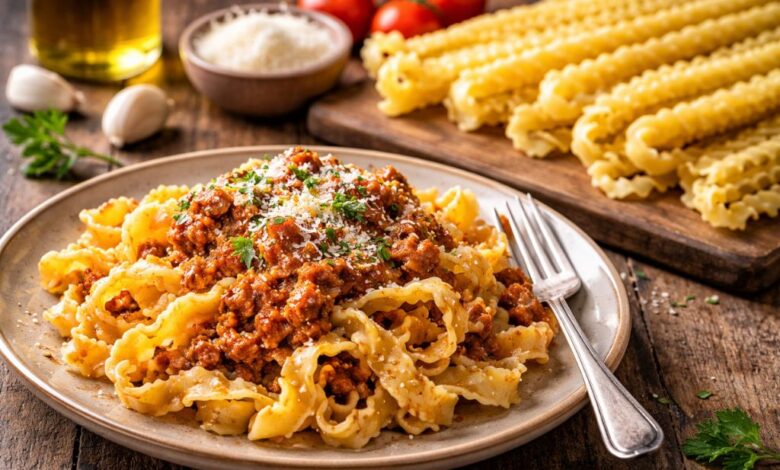
At first glance, mafaldine may appear similar to other ribbon pastas such as fettuccine or tagliatelle. However, a closer examination reveals its defining feature: the delicately ruffled edges that run along both sides of each strand.
These ribbons are typically about one centimeter wide, with a flat center and symmetrical waves on either side. The structure creates a unique combination of textures within a single strand. The central portion provides a smooth, firm bite, while the edges introduce a subtle variation in thickness and surface area.
This design is not purely aesthetic. The undulating edges serve a functional purpose by increasing the pasta’s ability to hold onto sauces. The ridges trap liquids and small particles, ensuring that each bite delivers a balanced combination of pasta and sauce.
In terms of production, mafaldine can be made either fresh or dried. Fresh versions often incorporate eggs, resulting in a softer, richer texture, while dried mafaldine is typically made from durum wheat semolina and water, offering a firmer bite and greater durability during cooking.
Craftsmanship and Production Techniques
The process of making mafaldine reflects the broader traditions of Italian pasta craftsmanship. Whether produced industrially or by hand, the goal is to achieve consistency in thickness while preserving the delicate wave pattern that defines the pasta.
In artisanal settings, mafaldine begins as a sheet of rolled dough. The dough is carefully cut into long ribbons, and specialized tools or cutters are used to create the ruffled edges. Precision is essential, as uneven edges can affect both cooking time and texture.
Industrial production follows a similar principle but relies on extrusion through specially designed dies. These dies shape the pasta as it emerges, imprinting the characteristic waves along the edges. The pasta is then dried under controlled conditions to preserve its structure and extend its shelf life.
The choice between fresh and dried mafaldine often depends on the intended dish. Fresh pasta is prized for its tenderness and is commonly used in more delicate preparations, while dried mafaldine is favored for robust sauces that require longer cooking times.
Culinary Function: Form Meets Flavor
Mafaldine’s true brilliance lies in its ability to enhance the dining experience through its structure. Italian cuisine places a strong emphasis on pairing specific pasta shapes with appropriate sauces, and mafaldine exemplifies this principle.
The ruffled edges increase surface area, allowing the pasta to capture and hold sauces more effectively than smooth varieties. This makes mafaldine particularly well-suited for rich, textured sauces that can cling to its contours.
Traditional pairings often include meat-based ragùs, where the sauce’s density complements the pasta’s structure. Cream-based sauces, especially those featuring mushrooms or cheese, also work exceptionally well, as they coat the ribbons evenly while settling into the ridges.
Seafood sauces offer another compelling combination. The pasta’s shape allows it to पकड़ small pieces of shrimp or shellfish, creating a harmonious balance of flavors in each bite. Even tomato-based sauces, when prepared with sufficient body and seasoning, can benefit from mafaldine’s ability to ধরে and distribute flavor.
The pasta’s width also contributes to its versatility. It is substantial enough to stand up to heavy sauces, yet refined enough to be used in more delicate dishes. This balance makes mafaldine a valuable addition to both traditional and contemporary kitchens.
Variations and Regional Interpretations
While mafaldine is most commonly associated with its long, ribbon form, variations do exist. One such variation is mafaldine corte, a shorter version of the pasta that retains the same ruffled edges but is cut into smaller segments. This form is often used in baked dishes or pasta salads, where shorter lengths are more practical.
The alternative name reginette is used interchangeably in many parts of Italy, though regional preferences may influence terminology. In some areas, the pasta may also be referred to by older or dialect-specific names, reflecting the diversity of Italian culinary language.
Despite these variations, the defining characteristic remains consistent: the wavy edges that distinguish mafaldine from other ribbon pastas.
Cultural Significance and Symbolism
Mafaldine’s connection to royalty is more than a historical curiosity; it reflects a broader cultural tendency within Italian cuisine to celebrate beauty and symbolism in everyday food.
The pasta’s elegant appearance makes it a popular choice for special occasions and festive meals. Its visual appeal enhances presentation, allowing chefs and home cooks alike to create dishes that are as pleasing to the eye as they are to the palate.
In this sense, mafaldine embodies the Italian philosophy that food should be both functional and beautiful. The pasta’s design is not merely decorative but serves a practical purpose, demonstrating how aesthetics and utility can coexist seamlessly.
This duality is a hallmark of Italian culinary tradition, where even the simplest ingredients are treated with care and attention to detail.
Nutritional Profile and Dietary Context
Like most traditional pasta, mafaldine is primarily composed of carbohydrates, making it a significant source of energy. When made from durum wheat semolina, it also provides a moderate amount of protein and contains minimal fat.
The nutritional value of a mafaldine dish, however, depends largely on the accompanying ingredients. Rich sauces can increase calorie and fat content, while lighter preparations with vegetables and lean proteins offer a more balanced profile.
Whole-grain versions of mafaldine are also available, providing additional fiber and nutrients. These alternatives cater to modern dietary preferences while preserving the pasta’s characteristic shape and texture.
Mafaldine in Contemporary Cuisine
In recent years, mafaldine has gained renewed attention among chefs and food enthusiasts seeking to explore lesser-known pasta shapes. Its unique appearance and functional advantages make it an appealing choice for innovative dishes.
Contemporary chefs often experiment with mafaldine by pairing it with unconventional ingredients or incorporating it into fusion cuisine. From truffle-infused cream sauces to seafood medleys with global influences, the pasta adapts well to creative interpretations.
At the same time, mafaldine remains rooted in tradition. Classic recipes continue to highlight its strengths, demonstrating that innovation and heritage can coexist within a single ingredient.
Comparing Mafaldine to Other Ribbon Pastas
To fully appreciate mafaldine, it is useful to compare it with other ribbon-style pastas. Fettuccine, for example, shares a similar width but lacks the ruffled edges, resulting in a smoother texture and less sauce retention. Tagliatelle is slightly narrower and traditionally associated with specific regional dishes, such as Bolognese.
Pappardelle, on the other hand, is much wider and often used with hearty, game-based sauces. While it offers a substantial bite, it does not provide the same textural variation as mafaldine.
These comparisons highlight mafaldine’s unique position within the pasta spectrum. It combines the width of broader ribbons with the added functionality of textured edges, creating a hybrid that excels in both form and function.
The Experience of Eating Mafaldine
Beyond its technical attributes, mafaldine offers a distinctive sensory experience. The interplay between the smooth center and the ruffled edges creates a dynamic texture that evolves with each bite.
The pasta’s ability to पकड़ sauce ensures that flavors are evenly distributed, enhancing the overall taste of the dish. This consistency contributes to a more satisfying and cohesive dining experience.
Visually, mafaldine adds an element of elegance to any plate. The flowing ribbons and delicate waves create a sense of movement and sophistication, elevating even simple preparations.
Conclusion: A Pasta of Substance and Style
Mafaldine stands as a testament to the ingenuity and artistry of Italian cuisine. Its origins in royal tribute, its carefully engineered structure, and its versatility in the kitchen all contribute to its enduring appeal.
In a culinary landscape where simplicity often reigns, mafaldine demonstrates that thoughtful design can transform an everyday ingredient into something extraordinary. It is a pasta that invites both appreciation and exploration, offering endless possibilities for those willing to engage with its unique qualities.
Whether served with a rich ragù, a delicate cream sauce, or a modern culinary creation, mafaldine continues to embody the essence of Italian cooking: a harmonious balance of tradition, beauty, and flavor.