Speed has always carried its own language, a kind of digital dialect shaped by games, communities, and the obsession with motion that refuses to slow down. Within this evolving vocabulary, the term “jipinfeiche” has emerged as a striking expression that blends linguistic identity with gaming culture. It does not simply describe racing; it reflects a mindset built around acceleration, precision, and the thrill of control at extreme velocity. In online spaces, especially where racing games dominate conversation, jipinfeiche has become more than a translated phrase. It has turned into a cultural marker that signals familiarity with one of the most influential racing game traditions in the world.
The Linguistic Pulse Behind Jipinfeiche
At its core, jipinfeiche originates from Chinese terminology, combining the ideas of “premium quality” and “speeding cars.” This fusion of meaning creates a phrase that does not merely refer to vehicles but to a heightened state of performance and intensity. Language in gaming communities often evolves to capture emotions that standard vocabulary cannot fully express, and jipinfeiche is a strong example of this transformation.
When players use the term, they are not just naming a game or describing a car. They are referencing a feeling associated with acceleration, drift control, and the pursuit of victory at high speed. The phonetic romanization “jipinfeiche” allows this concept to travel beyond Chinese script and enter global digital conversations, where it is recognized by gamers who may not even understand its original characters but understand its energy instantly.
The Connection Between Jipinfeiche and Racing Games
The strongest association of jipinfeiche lies in its connection to the internationally acclaimed racing game franchise Need for Speed, developed by Electronic Arts. In Chinese-speaking regions, the franchise is commonly referred to by this localized name, embedding jipinfeiche into gaming culture at a foundational level. The global identity of the franchise is captured within this term, but it also carries cultural adaptation that makes it unique in its regional expression.
The franchise itself, represented globally by Need for Speed, has shaped modern racing game expectations for decades. It introduced cinematic police chases, street racing aesthetics, and deep car customization systems that transformed how players experience driving simulations. Within this ecosystem, jipinfeiche becomes more than a label; it becomes a cultural translation of speed-driven gameplay.
Players encountering the term often discover it through gameplay clips, discussions, or mobile adaptations of racing games. Over time, it has evolved into shorthand for any experience that mirrors the adrenaline-heavy structure of arcade-style racing.
Digital Identity and the Rise of Racing Expression
Gaming culture thrives on shorthand expressions, and jipinfeiche stands as a symbol of how language adapts to digital environments. In fast-moving online communities, words that capture emotion tend to survive longer than formal definitions. Jipinfeiche expresses urgency, competition, and mechanical mastery in a way that resonates with players across different platforms.
The racing genre itself contributes heavily to this linguistic evolution. Unlike slower narrative-driven games, racing games demand immediate reaction, split-second decision-making, and continuous engagement. The vocabulary surrounding them naturally becomes sharp, energetic, and condensed. Jipinfeiche fits perfectly into this pattern because it reflects not only the act of racing but also the identity of players who thrive in high-pressure environments.
In many ways, using the term signals belonging. It identifies someone as part of a global gaming culture that understands the rhythm of speed and the satisfaction of perfect drift control.
The Emotional Architecture of Speed
To understand jipinfeiche fully, it is necessary to look beyond language and examine the emotional structure it represents. Racing games are built around tension and release. Every turn carries risk, every straight road invites acceleration, and every finish line rewards precision. Jipinfeiche encapsulates this emotional cycle in a single expressive term.
The feeling associated with it is not static. It shifts depending on context. In one moment, it may represent the excitement of launching a heavily modified sports car onto an open highway. In another, it may reflect the frustration of losing control during a sharp corner. This emotional flexibility is part of what makes the term culturally powerful. It does not lock meaning into a single definition; instead, it expands with every player experience.
Cultural Expansion Through Online Communities
The global spread of jipinfeiche is closely tied to the rise of online gaming communities and content-sharing platforms. Gameplay videos, livestreams, and short-form clips have played a major role in introducing the term to audiences outside its original linguistic environment. As players search for racing content, they encounter the word in titles, comments, and discussions, gradually absorbing its meaning through context.
This organic diffusion of language is one of the most interesting aspects of modern digital culture. Unlike traditional translation systems, gaming terminology often spreads through exposure rather than explanation. Jipinfeiche is a product of this phenomenon, where meaning is learned through experience rather than formal instruction.
In competitive gaming spaces, the term is sometimes used to describe not just a game but a style of play. Aggressive overtaking, precise cornering, and high-speed risk-taking all fall under its conceptual umbrella. This adaptability ensures its continued relevance in evolving gaming ecosystems.
Mobile Gaming and the Reinforcement of Jipinfeiche
The rise of mobile gaming has significantly strengthened the visibility of jipinfeiche. Racing games on smartphones have brought high-speed gameplay to wider audiences, many of whom encounter the term during downloads, updates, or community discussions. The accessibility of mobile platforms has allowed racing culture to extend beyond traditional console or PC environments.
As mobile adaptations of racing experiences became more sophisticated, the emotional intensity associated with jipinfeiche remained intact. Players still experience the same adrenaline-driven mechanics, even if the platform has changed. This consistency across devices reinforces the term’s identity as a universal expression of speed-based gaming.
The mobile gaming ecosystem has also contributed to the globalization of gaming vocabulary. Terms that were once region-specific now circulate freely across borders, and jipinfeiche is a clear example of this linguistic migration.
Misinterpretations and Digital Noise
Like many internet-born or internet-adapted terms, jipinfeiche is sometimes misunderstood. Outside of gaming contexts, it may be mistakenly described as a standalone application, a brand, or even a technical system. These misinterpretations often arise from fragmented online information or SEO-driven content that prioritizes visibility over accuracy.
Despite this noise, the core meaning remains stable within gaming culture. The term consistently points back to high-speed racing experiences and the emotional identity tied to them. This resilience highlights how strong cultural vocabulary can survive even when surrounded by inconsistent explanations.
The Aesthetic of Speed in Modern Gaming
Jipinfeiche also represents a broader aesthetic trend in digital entertainment. Modern racing games are not just about mechanics; they are about style, visual impact, and sensory immersion. Neon-lit highways, detailed car models, realistic engine sounds, and dynamic weather systems all contribute to an experience that feels cinematic.
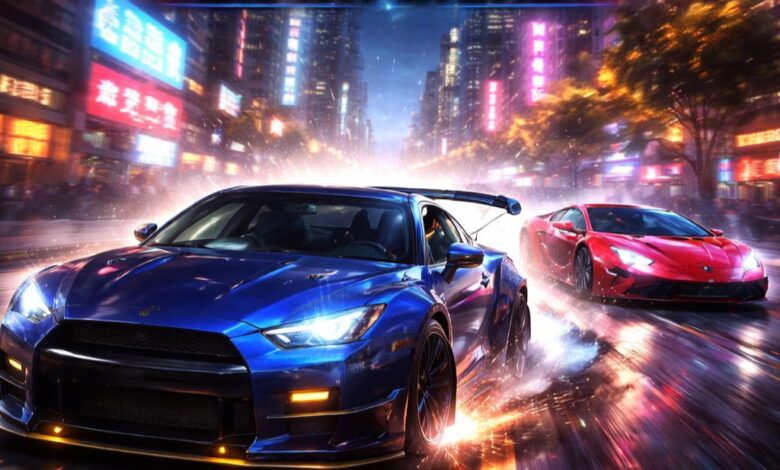
Within this environment, jipinfeiche becomes a symbolic label for the entire aesthetic. It captures the visual intensity of drifting through city streets at night, the sound of engines pushing beyond limits, and the satisfaction of perfectly timed acceleration. It is a word that compresses an entire sensory experience into a recognizable expression.
Global Identity of Racing Culture
As gaming continues to globalize, terms like jipinfeiche highlight the shared identity forming across different languages and regions. Racing games have a universal appeal because they rely on instinct rather than language. Speed, timing, and control are understood regardless of cultural background.
This universality allows jipinfeiche to function as a bridge between linguistic systems. Even players unfamiliar with Chinese characters can recognize the meaning through gameplay context. This makes the term an example of how digital culture transcends traditional language barriers.
Conclusion: Jipinfeiche as a Living Expression of Speed
Jipinfeiche is more than a translated phrase or a gaming reference. It is a living expression of how modern digital culture shapes language around experience rather than grammar. It carries the essence of speed, competition, and emotional intensity that defines racing games across platforms.
Through its connection to globally recognized franchises like Need for Speed, it has gained a place in international gaming vocabulary. Yet its identity remains flexible, adapting to new platforms, new players, and new interpretations of speed.
What makes jipinfeiche compelling is not just what it means, but how it feels. It exists in the moment a player hits maximum speed on an open track, in the tension before a sharp drift, and in the satisfaction of crossing the finish line ahead of competitors. It is language shaped by motion, and meaning defined by acceleration.
In a digital world that continues to move faster each day, jipinfeiche stands as a reminder that sometimes the most powerful words are not those that describe speed, but those that embody it.