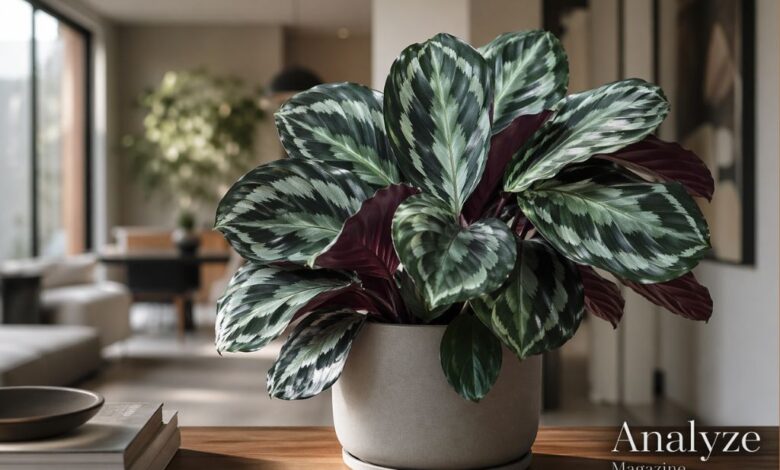
A Plant That Feels More Like Art Than Flora
Calathea is not simply a houseplant that sits quietly in a corner of a room. It behaves more like a living design piece shaped by nature itself, carrying patterns that look hand-painted and movements that feel almost intentional. The first encounter with Calathea often leaves a lasting impression because its leaves do not appear ordinary or repetitive. They look composed, detailed, and deeply expressive, as if each leaf holds its own identity.
What makes Calathea especially intriguing is the way it transforms indoor spaces without demanding attention in a loud or aggressive way. Instead, it introduces a quiet visual rhythm. The plant responds to light, humidity, and time of day, which gives it a dynamic presence that changes subtly but consistently. This living behavior is one of the reasons Calathea has become a preferred choice for modern interiors where natural elegance is valued over artificial decoration.
The Tropical Roots That Define Calathea
Calathea originates from the dense rainforests of South America, where humidity is high, light is filtered, and the environment is consistently warm. In these forests, Calathea grows beneath tall trees that shield it from direct sunlight. This natural habitat is essential to understanding its behavior indoors because the plant still carries the memory of those conditions in its structure and needs.
In the wild, Calathea grows close to the forest floor where organic matter is abundant and moisture is constantly present. The soil is soft, rich, and breathable, allowing its roots to expand gently without stress. This environment has shaped Calathea into a plant that thrives on stability rather than extremes. It does not respond well to sudden environmental shifts, which explains why indoor care requires consistency in light, humidity, and watering.
The Visual Language of Calathea Leaves
The most striking feature of Calathea is its foliage. Each leaf appears like a carefully designed pattern rather than a random natural occurrence. Some varieties display feather-like strokes that spread across the surface with artistic precision, while others show bold stripes or symmetrical markings that resemble modern abstract art.
The colors of Calathea also contribute to its visual depth. Shades of deep green are often paired with silvery overlays, soft purples, or pink accents beneath the leaves. This contrast becomes even more noticeable when the plant moves throughout the day. Calathea leaves open during daylight and gently fold upward at night, creating a subtle sense of motion that feels almost choreographed by nature.
This movement is not decorative but biological, a response to light cycles known as nyctinasty. However, when observed in a home environment, it gives Calathea a personality that distinguishes it from static ornamental plants.
The Sensitivity That Defines Its Care Needs
Calathea is widely admired but also known for its sensitivity. This sensitivity is not a flaw but a reflection of its natural habitat. Because it evolved in stable rainforest conditions, it reacts quickly to changes in temperature, water quality, and humidity.
Light plays a critical role in the health of Calathea. While it requires brightness, direct sunlight can be harmful. Exposure to harsh light often leads to fading patterns and damaged leaf edges. Instead, filtered or indirect light supports its natural coloration and helps maintain the integrity of its designs.
Humidity is equally important. Calathea thrives in moist air, and dry indoor environments can quickly affect its appearance. When humidity drops, the leaf edges may become dry or curled, signaling that the plant is under stress. This reaction is one of the clearest indicators of how closely Calathea depends on atmospheric balance.
Water as a Defining Element in Calathea Care
Water quality and watering habits play a significant role in the life of Calathea. Unlike many hardy houseplants, it does not respond well to inconsistent watering schedules or chemically heavy tap water. The roots prefer moisture that is steady but not excessive, creating a balance between hydration and oxygen flow.
When Calathea is watered properly, its leaves remain firm, vibrant, and expressive. When overwatered or underwatered, the plant quickly shows signs of distress through curling or discoloration. This responsiveness makes it a plant that communicates clearly, though subtly, with its caretaker.
Soil and the Importance of Breathable Growth Medium
The soil environment for Calathea must reflect its rainforest origins. A compact or heavy soil can suffocate its roots, while overly dry soil can disrupt its moisture balance. What Calathea requires is a growing medium that retains moisture while allowing airflow.
This balance ensures that the roots remain healthy and active without becoming waterlogged. In natural terms, Calathea thrives in soil that behaves like forest floor material, rich in organic content and naturally decomposing matter. This structure supports steady growth and long-term plant stability.
Popularity of Calathea in Interior Spaces
Calathea has become a favored choice in interior design due to its ability to elevate visual environments without overwhelming them. Its patterned leaves introduce texture and depth, making it especially suitable for minimalist or modern interiors where natural contrast is needed.
Unlike artificial décor elements, Calathea brings unpredictability in a controlled form. Its leaves shift, respond, and evolve slightly over time, giving rooms a living quality. Designers often use Calathea to soften architectural sharpness or to introduce a calming green presence into structured spaces.
Its adaptability to indoor containers also makes it versatile. Whether placed in ceramic pots, woven baskets, or sleek modern planters, Calathea retains its identity and enhances its surroundings.
The Challenge Behind Its Beauty
Despite its elegance, Calathea is not considered an effortless plant. Its care demands attention to detail and environmental consistency. Small changes in air dryness, watering habits, or light exposure can reflect quickly in its appearance.
However, this sensitivity also builds a stronger connection between the plant and its caretaker. Observing Calathea closely teaches patience and awareness. It encourages a more mindful approach to plant care, where observation becomes as important as action.
The plant does not thrive under neglect, but it also does not require excessive intervention. Instead, it exists in a balanced relationship with its environment, responding gently to care that aligns with its natural rhythm.
Symbolism and Emotional Presence of Calathea
Beyond its physical characteristics, Calathea often carries symbolic meaning in indoor spaces. It is associated with calmness, renewal, and natural balance. Its rhythmic leaf movement is sometimes interpreted as a representation of daily cycles and life’s quiet transitions.
Many plant enthusiasts find Calathea emotionally grounding because it introduces a sense of softness into structured environments. Its presence encourages stillness and observation, making it more than just a decorative element.
The Lasting Appeal of Calathea
Calathea continues to maintain its popularity because it offers more than visual appeal. It brings a living quality into indoor environments that evolves over time. Its patterns remain fresh, its movement remains active, and its presence remains calming.
What sets Calathea apart is not just its appearance but its behavior. It does not remain static in its beauty. Instead, it interacts gently with its surroundings, responding to light and time in a way that feels almost conversational.
For those who appreciate plants that carry personality, texture, and subtle motion, Calathea stands as one of the most rewarding choices in indoor gardening. It is a reminder that nature does not always need to be loud to be extraordinary.