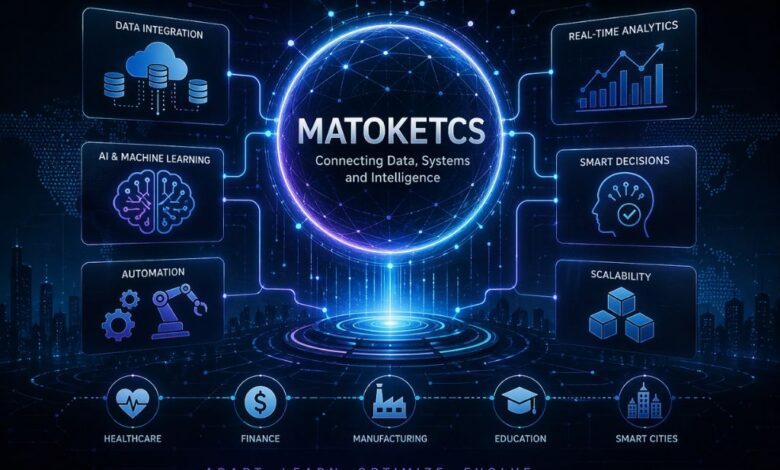
Matoketcs stands at the crossroads of modern digital transformation, quietly shaping a new way of thinking about data, systems, and decision-making. Rather than behaving like a traditional technology model that simply processes inputs and produces outputs, matoketcs introduces a dynamic layer of intelligence where context, timing, and adaptability become central to how systems operate. Attention around matoketcs has grown because it offers something many organizations have been struggling to achieve for years, a seamless bridge between raw data and meaningful action.
Understanding Matoketcs as a Living Digital Framework
Matoketcs cannot be confined to a single definition because it evolves alongside the systems it supports. It is better understood as a living framework that continuously learns, adapts, and refines its behavior based on incoming information. Systems built on matoketcs do not wait for instructions in a rigid sequence. They observe patterns, interpret signals, and respond intelligently in real time.
Traditional digital systems often rely on static rules and predefined logic, which limits their ability to handle complexity. Matoketcs shifts this paradigm by introducing contextual awareness. Instead of asking what happened, matoketcs focuses on why it happened and what should happen next. This subtle but powerful shift transforms passive systems into active participants in decision-making processes.
Architecture Behind Matoketcs Innovation
Matoketcs operates through a layered architecture designed to support flexibility and intelligence. At its foundation lies continuous data flow, where information streams in from multiple sources such as user interactions, devices, and digital platforms. This data is not stored for later analysis alone but is actively processed as it arrives.
Above this layer, distributed system design allows different components to function independently while remaining interconnected. This ensures that matoketcs systems can scale efficiently without losing performance. Artificial intelligence plays a critical role within this architecture, enabling predictive modeling and pattern recognition that improve over time.
Automation ties everything together by translating insights into actions. Once matoketcs identifies a pattern or detects a change in conditions, it can trigger responses instantly. This creates a closed loop where data, analysis, and execution continuously feed into each other, making systems more responsive and efficient.
Why Matoketcs Feels Different from Traditional Systems
A noticeable difference emerges when comparing matoketcs with conventional frameworks. Traditional systems often treat data as isolated units, analyzing them after events occur. Matoketcs treats data as part of a broader narrative, where each piece of information gains meaning through its relationship with other variables.
Responsiveness becomes a defining feature. Instead of reacting after delays, matoketcs operates in real time, enabling faster and more accurate decisions. This capability is especially valuable in environments where timing is critical, such as financial transactions or healthcare monitoring.
Adaptability also sets matoketcs apart. Systems built on this framework do not remain static. They evolve by learning from new data, adjusting their behavior, and improving outcomes over time. This continuous evolution allows organizations to remain agile in rapidly changing environments.
Real World Influence of Matoketcs Across Industries
Matoketcs has begun to influence multiple industries by introducing smarter ways to manage complexity. In healthcare, it enables systems to analyze patient data alongside environmental and historical factors, leading to more personalized treatment strategies. Doctors gain insights that go beyond surface-level symptoms, improving both diagnosis and care.
Financial institutions leverage matoketcs to monitor transactions in real time, identifying unusual patterns that could indicate fraud. This proactive approach enhances security while maintaining smooth customer experiences. Manufacturing sectors use matoketcs to predict equipment failures before they occur, reducing downtime and increasing productivity.
Education systems benefit from matoketcs by tailoring learning experiences to individual students. By analyzing behavior and performance, platforms can adjust content delivery to match each learner’s needs. Urban development also sees transformation through matoketcs, where smart city initiatives optimize traffic flow, energy usage, and public services.
Growing Popularity of Matoketcs in Digital Transformation
Rising interest in matoketcs reflects broader changes in how organizations approach technology. Rapid growth of data has created challenges that traditional systems struggle to handle. Matoketcs offers a solution by turning overwhelming data streams into actionable insights.
Cloud computing and distributed technologies have further accelerated adoption. These advancements provide the infrastructure needed for matoketcs to operate effectively at scale. Businesses recognize that staying competitive requires more than just collecting data. They need systems that understand and act on that data instantly.
Another factor driving popularity is demand for automation. Organizations seek ways to reduce manual processes while maintaining accuracy and efficiency. Matoketcs fulfills this need by combining intelligence with automation, creating systems that operate with minimal human intervention.
Benefits That Make Matoketcs a Game Changer
Efficiency improves significantly when matoketcs is implemented correctly. Automated processes reduce delays and free up resources for strategic tasks. Decision-making becomes more informed because it is based on context rather than isolated data points.
Scalability ensures that systems can grow alongside organizational needs. Matoketcs frameworks adapt to increasing workloads without compromising performance. This flexibility makes it suitable for both startups and large enterprises.
Innovation becomes easier within matoketcs environments. Teams can experiment with new ideas, test scenarios, and refine strategies quickly. Continuous learning capabilities ensure that improvements are not temporary but become part of the system’s evolving intelligence.
Challenges That Shape Matoketcs Development
Despite its potential, matoketcs faces challenges that influence its adoption. Lack of a universally accepted definition can create confusion, especially for organizations trying to implement it for the first time. Different interpretations lead to varied approaches, which can affect consistency.
Technical complexity also presents obstacles. Integrating multiple technologies such as artificial intelligence, real-time data processing, and distributed systems requires expertise and resources. Organizations must invest in both infrastructure and skilled professionals to fully leverage matoketcs.
Data security remains a critical concern. As matoketcs relies heavily on continuous data flow, ensuring privacy and protection becomes essential. Addressing these challenges is necessary for building trust and enabling wider adoption.
Future Direction of Matoketcs in Emerging Technologies
Momentum behind matoketcs suggests a strong future in digital ecosystems. Advancements in artificial intelligence, machine learning, and interconnected devices will continue to enhance its capabilities. Systems will become more intuitive, capable of understanding not just data but also human behavior and intent.
Integration with emerging technologies such as Internet of Things will expand matoketcs applications even further. Devices will communicate seamlessly, creating environments where decisions are made automatically based on real-time conditions. This level of intelligence has the potential to transform industries and everyday life.
Organizations that embrace matoketcs early are likely to gain a competitive advantage. Ability to adapt quickly, make smarter decisions, and optimize operations positions them ahead in an increasingly data-driven world.
Conclusion
Matoketcs represents more than just a technological concept. It reflects a shift in how systems are designed, how data is interpreted, and how decisions are made. By combining context, intelligence, and adaptability, matoketcs transforms passive systems into active, learning entities.
Growing adoption highlights its relevance in modern digital transformation. Challenges remain, but ongoing advancements continue to refine its potential. Matoketcs is not a temporary trend. It is a glimpse into the future of intelligent systems where data does not just inform decisions but actively shapes them.