Repmold: Redefining Speed, Precision, and Innovation in Modern Manufacturing

Introduction: A New Chapter in Industrial Evolution
Manufacturing has always been at the heart of human progress, shaping everything from simple tools to advanced technologies that define modern life. Over the past few decades, the industry has undergone rapid transformation driven by digitalization, automation, and the demand for faster product development cycles. In this context, a new concept—Repmold—has begun to attract attention as a forward-looking approach that blends speed with precision.
Repmold represents an emerging philosophy in manufacturing that seeks to overcome the limitations of traditional molding processes while preserving their strengths. By combining rapid prototyping techniques with efficient mold-based production, it introduces a streamlined pathway from concept to finished product. As industries face increasing pressure to innovate quickly without compromising quality, Repmold offers a compelling solution.
Understanding Repmold: Concept and Meaning
At its core, Repmold is a hybrid manufacturing approach that integrates replication and molding into a unified system. The term itself reflects its dual focus: “replication,” emphasizing repeatability and scalability, and “molding,” highlighting the structured shaping of materials into precise forms.
Unlike conventional manufacturing methods that separate prototyping and production into distinct stages, Repmold connects these phases into a continuous workflow. This integration allows for rapid design validation, efficient mold creation, and consistent mass production. The result is a system that reduces delays, enhances accuracy, and supports iterative development.
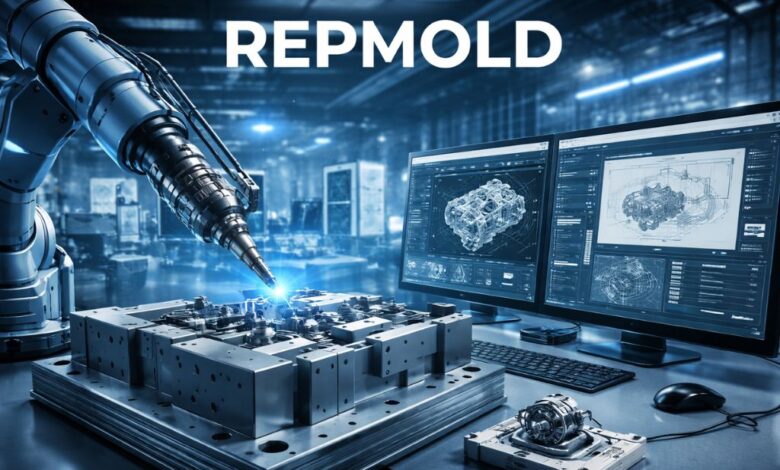
Repmold is not a single machine or tool but rather a methodology supported by a combination of technologies, including digital design software, additive manufacturing, and automated production systems. It is best understood as a strategic framework for modern manufacturing rather than a standalone process.
The Evolution of Manufacturing Leading to Repmold
To fully appreciate the significance of Repmold, it is important to consider the evolution of manufacturing practices. Traditional molding techniques, such as injection molding and die casting, have long been valued for their ability to produce large quantities of identical parts with high precision. However, these methods often require significant time and investment in tooling, making them less suitable for rapid innovation.
The introduction of rapid prototyping technologies, particularly 3D printing, addressed some of these challenges by enabling quick creation of design models. While these technologies improved speed and flexibility, they were not always ideal for large-scale production due to limitations in material properties and cost efficiency.
Repmold emerges as a response to this gap. By combining the agility of prototyping with the reliability of molding, it creates a balanced approach that meets the demands of contemporary manufacturing. This evolution reflects a broader shift toward integrated systems that prioritize efficiency, adaptability, and sustainability.
How Repmold Works: A Seamless Workflow
The Repmold process is characterized by its streamlined and interconnected stages, each contributing to a faster and more efficient production cycle.
The journey begins with digital design, where engineers use advanced modeling software to create detailed representations of a product. These designs can be quickly modified and optimized, allowing for experimentation and refinement before physical production begins.
Once a design is finalized, rapid prototyping technologies are employed to produce initial models. These prototypes serve as tangible representations that can be tested for functionality, ergonomics, and performance. Feedback from this stage is incorporated into the design, ensuring that potential issues are addressed early.
The next phase involves mold development. Unlike traditional methods that require extensive time to create rigid tooling, Repmold utilizes flexible and efficient techniques to produce molds more quickly. These molds are often designed to accommodate adjustments, further enhancing the system’s adaptability.
Finally, the replication stage begins, where products are manufactured in large quantities using the developed molds. Because the earlier stages have been optimized, this phase benefits from high precision and consistency, resulting in minimal defects and reduced waste.
Technological Foundations of Repmold
Repmold relies on a convergence of advanced technologies that work together to deliver its benefits. Digital design tools, such as computer-aided design and manufacturing systems, form the backbone of the process by enabling precise modeling and simulation.
Additive manufacturing plays a crucial role in rapid prototyping, allowing for quick production of complex geometries that would be difficult to achieve using traditional methods. This capability enhances creativity and innovation in product design.
Computer numerical control machining contributes to the accuracy and efficiency of mold creation. By automating the shaping of materials, it ensures that molds meet exact specifications with minimal human intervention.
Automation and artificial intelligence further enhance the process by optimizing workflows, predicting potential issues, and improving overall efficiency. These technologies enable manufacturers to achieve a level of precision and speed that was previously unattainable.
Advantages of Repmold in Modern Manufacturing
One of the most significant advantages of Repmold is its ability to accelerate production timelines. By integrating design, prototyping, and manufacturing into a cohesive system, it reduces the time required to bring products to market. This speed is particularly valuable in industries where innovation cycles are short and competition is intense.
Cost efficiency is another key benefit. Traditional molding processes often involve high upfront costs for tooling, which can be a barrier for smaller companies or projects with limited budgets. Repmold minimizes these costs by streamlining mold creation and reducing material waste.
Precision and consistency are also central to its appeal. The use of advanced technologies ensures that products are manufactured with a high degree of accuracy, resulting in fewer defects and improved quality.
Flexibility is equally important. Repmold allows for rapid design changes, enabling manufacturers to respond quickly to market demands or customer feedback. This adaptability supports the growing trend toward customization and personalized products.
Finally, sustainability is an increasingly important consideration in manufacturing. By optimizing material usage and reducing waste, Repmold contributes to more environmentally responsible production practices.
Applications Across Industries
Repmold’s versatility makes it applicable to a wide range of industries, each benefiting from its unique combination of speed and precision.
In the automotive sector, it enables rapid development and testing of components, helping manufacturers bring new models to market more quickly. The ability to iterate designs efficiently is particularly valuable in an industry characterized by constant innovation.
The electronics industry also benefits from Repmold, as it allows for the production of intricate components with tight tolerances. This capability is essential for devices that require both compact design and high performance.
In healthcare, Repmold supports the creation of medical devices and equipment with precise specifications. Its ability to produce small batches efficiently is especially useful for specialized applications and customized solutions.
The aerospace industry, known for its stringent quality requirements, leverages Repmold to produce lightweight and complex components. The combination of accuracy and reliability is critical in this field.
Consumer goods manufacturers use Repmold to develop and produce a wide variety of products, from household items to personal accessories. Its flexibility and efficiency enable companies to respond quickly to changing consumer preferences.
Comparing Repmold with Traditional Methods
While traditional molding techniques remain valuable for large-scale production, they often lack the flexibility and speed required in today’s dynamic market. Repmold addresses these limitations by offering a more agile approach.
In conventional processes, the creation of molds can take weeks or even months, delaying production and increasing costs. Repmold significantly reduces this timeline, allowing for faster transitions from design to manufacturing.
Traditional methods also tend to be less adaptable, making it difficult to implement design changes once production has begun. In contrast, Repmold supports iterative development, enabling continuous improvement throughout the process.
However, it is important to recognize that Repmold is not a complete replacement for traditional methods. Instead, it complements them by providing an alternative that is better suited to certain applications, particularly those requiring speed, flexibility, and innovation.
Challenges and Considerations
Despite its many advantages, Repmold is not without challenges. The adoption of this approach often requires significant investment in advanced technologies and infrastructure. For some organizations, this initial cost can be a barrier.
The complexity of the system also demands a skilled workforce capable of managing and operating sophisticated tools and processes. Training and expertise are essential to fully realize the benefits of Repmold.
Integration with existing manufacturing systems can present additional difficulties. Companies may need to adapt their workflows and processes to accommodate the new methodology, which can require time and resources.
Furthermore, while Repmold excels in many areas, it may not always be the most efficient choice for extremely large-scale production where traditional methods have already been optimized for cost and efficiency.
The Future of Repmold
As technology continues to advance, the potential of Repmold is expected to grow. The integration of artificial intelligence and machine learning could further enhance its capabilities by enabling predictive design, automated optimization, and real-time quality control.
The rise of smart manufacturing and Industry 4.0 is likely to accelerate the adoption of Repmold. Connected systems and data-driven decision-making will enable manufacturers to achieve greater efficiency and precision.
Sustainability will also play a significant role in shaping the future of Repmold. As environmental concerns become increasingly important, the ability to reduce waste and optimize resource usage will make this approach even more attractive.
In addition, the trend toward mass customization is expected to drive demand for flexible manufacturing solutions. Repmold’s ability to accommodate design changes and produce customized products efficiently positions it as a key enabler of this trend.
Conclusion: A Transformative Approach to Manufacturing
Repmold represents a significant step forward in the evolution of manufacturing. By combining the strengths of rapid prototyping and traditional molding, it offers a balanced approach that addresses the challenges of modern production.
Its emphasis on speed, precision, and flexibility makes it particularly well-suited to industries that require constant innovation and adaptability. While it is not without its challenges, the benefits it provides make it a valuable addition to the manufacturing landscape.
As industries continue to evolve and embrace new technologies, Repmold is poised to play an increasingly important role in shaping the future of production. It stands as a testament to the power of innovation and the ongoing quest to improve efficiency, quality, and sustainability in manufacturing.