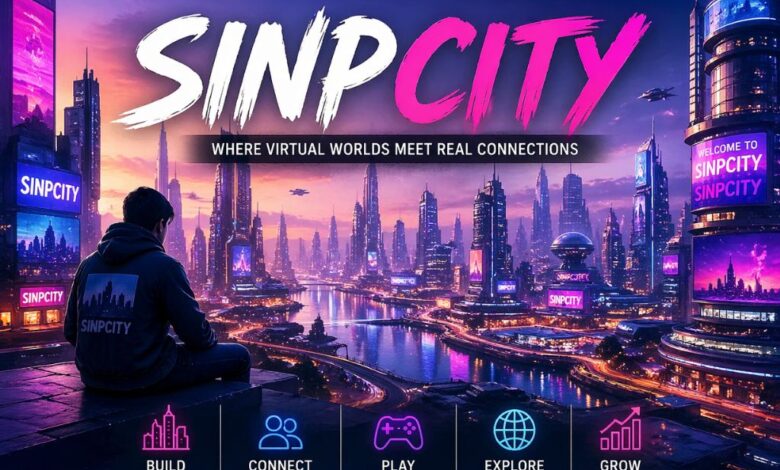
Sinpcity has emerged as one of those modern digital terms that feels both familiar and mysterious at the same time. It does not belong to a single platform, game, or officially defined system, yet it continues to circulate across gaming communities, social media spaces, and online discussions with growing frequency. What makes sinpcity particularly interesting is not a fixed identity but its fluid nature, allowing it to evolve depending on how different digital communities interpret and use it.
Across the internet, sinpcity is often treated as more than just a word. It represents a layered idea that blends virtual environments, meme culture, and conceptual thinking about online behavior. In some contexts it refers to imagined digital cities where users interact, create, and build experiences. In others, it becomes a humorous reflection of internet slang and social patterns. This flexibility has turned sinpcity into a cultural signal rather than a single product or defined system.
The Conceptual Identity Behind Sinpcity
Understanding sinpcity requires stepping away from the expectation of a fixed definition. Unlike traditional digital platforms that come with official descriptions, sinpcity exists in a more abstract form. It is shaped by interpretation, and this interpretation changes depending on where and how the term is used.
At its core, sinpcity is often associated with the idea of a virtual space that mimics the structure of a city. This is not necessarily a literal city-building application, but rather a conceptual environment where users imagine digital societies forming and evolving. Within this interpretation, sinpcity becomes a symbolic world where creativity, interaction, and digital identity merge into one continuous experience.
The absence of a strict definition allows sinpcity to adapt across different conversations. In gaming discussions, it may resemble a simulation environment. In cultural commentary, it may represent online behavior patterns. In creative communities, it can even serve as a metaphor for digital storytelling.
Sinpcity and the Evolution of Virtual Worlds
The rise of sinpcity is closely connected to the broader evolution of virtual environments. Over the past decade, digital spaces have moved far beyond simple games or static platforms. They have transformed into interactive ecosystems where users are active participants rather than passive observers.
Within this context, sinpcity is often imagined as a layered virtual world where users can engage in city-like experiences. These experiences may include constructing environments, managing resources, or interacting with other participants in real time. Even when sinpcity is not tied to an actual software product, the idea reflects the direction in which digital entertainment is heading.
Modern virtual worlds increasingly focus on immersion and user-driven content. Sinpcity fits naturally into this trend because it represents a space where imagination defines structure. Instead of fixed rules, it allows for flexible interpretation, mirroring how online platforms today encourage user-generated creativity.
Cultural Meaning and Internet Identity
Beyond virtual environments, sinpcity has gained traction as a cultural expression within online communities. Internet culture often transforms ordinary words into symbolic references, and sinpcity follows this pattern closely.
In meme culture, sinpcity is frequently associated with exaggerated online behavior, particularly in humorous discussions about digital relationships and social interactions. It becomes a playful metaphor for spaces where internet users express intense admiration, engagement, or emotional reactions. This usage reflects how online communities create shared language to describe evolving social patterns.
The cultural strength of sinpcity lies in its adaptability. It does not restrict meaning but expands it. As a result, users can apply it in different contexts without breaking its relevance. This makes sinpcity part of a larger category of internet-born expressions that gain significance through collective usage rather than formal definition.
The Symbolism of Sinpcity in Digital Society
Sinpcity also carries a deeper symbolic layer when viewed through the lens of digital sociology. Online environments today are no longer just communication tools. They function as structured spaces where identity, behavior, and relationships develop in complex ways.
In this symbolic interpretation, sinpcity represents a metaphorical digital city built from user interactions. Every message, post, reaction, and connection contributes to the formation of this invisible structure. Just like a physical city grows through human activity, sinpcity grows through digital engagement.
This symbolic reading highlights how modern internet spaces influence human behavior. Users often construct identities based on platform interactions, and communities form around shared interests and emotional connections. Sinpcity becomes a representation of this continuous construction of digital society.
The Role of Sinpcity in Gaming and Simulation Thinking
Gaming culture plays a significant role in shaping the perception of sinpcity. Simulation games and virtual city-building experiences have long been popular among players who enjoy strategic planning and creative design. Sinpcity draws inspiration from these concepts even when it is not directly linked to a specific game.
Within gaming discussions, sinpcity is often imagined as a space where players can experiment with building digital environments. These environments may include urban planning, social systems, or even fictional economies. The appeal lies in the freedom to create and control a world that behaves according to user decisions.
This connection to simulation thinking also reflects a broader trend in interactive entertainment. Modern gaming increasingly focuses on open-ended systems where players shape outcomes rather than follow fixed narratives. Sinpcity fits into this philosophy by representing a space defined by creativity and interaction rather than structure.
Digital Communities and the Spread of Sinpcity
One of the reasons sinpcity continues to grow in popularity is its presence across multiple digital communities. Social media platforms, discussion forums, and content-sharing spaces all contribute to its circulation. Each community adds its own interpretation, allowing the concept to evolve organically.
This decentralized growth is typical of internet-born ideas. Instead of being introduced by a company or organization, sinpcity has developed through user engagement and repetition. As more people encounter the term, they assign meaning based on context, which further expands its definition.
This process reflects how modern digital culture operates. Language, meaning, and symbolism are no longer controlled by single authorities but are shaped collectively by users across platforms. Sinpcity is a clear example of this decentralized cultural evolution.
Technological Interpretation and Future Possibilities
From a technological perspective, sinpcity can also be viewed as a representation of future digital ecosystems. As technologies like virtual reality, augmented reality, and artificial intelligence continue to develop, the boundaries between physical and digital spaces are becoming less defined.
In this environment, sinpcity can be imagined as a fully immersive digital city where users interact through advanced systems. These systems may simulate real-world environments or create entirely new forms of digital existence. While sinpcity itself is not tied to a specific product, it reflects the direction in which immersive technologies are moving.
The idea of a responsive, user-driven digital city aligns with current innovations in metaverse development and interactive simulation platforms. Sinpcity becomes a conceptual bridge between current technology and future possibilities.
Psychological and Social Dimensions of Sinpcity
Another important aspect of sinpcity is its connection to human psychology in digital environments. Online spaces often influence emotions, behavior, and identity formation. Sinpcity reflects these influences by acting as a conceptual space where digital interaction shapes perception.
Users engage with online communities not only for information but also for belonging and expression. Sinpcity symbolizes this emotional dimension of internet culture, where virtual interactions carry real psychological impact.
This interpretation highlights how deeply integrated digital life has become in everyday human experience. Sinpcity, in this sense, is not just a concept but a reflection of how people navigate identity and connection in online spaces.
Conclusion: The Expanding Meaning of Sinpcity
Sinpcity stands as a modern example of how digital culture creates meaning through collective interpretation. It does not rely on official definitions or fixed structures. Instead, it evolves continuously as users apply it in different contexts, from gaming imagination to meme culture and symbolic analysis.
Its strength lies in its openness, allowing it to function as a virtual idea, a cultural expression, and a conceptual metaphor all at once. As digital environments continue to expand, sinpcity will likely remain a flexible term that adapts alongside new technologies and online behaviors.
What makes sinpcity significant is not what it definitively is, but what it represents: a constantly shifting reflection of the internet itself, shaped by creativity, interaction, and the evolving nature of digital society.