AI Chatbots for University Admissions: Automating Inquiries, Campus Tours & Application Follow-Ups

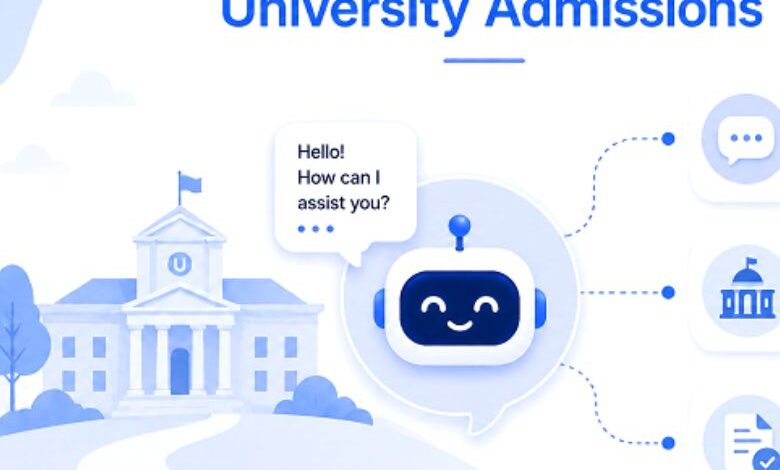
Admissions teams are under steady pressure to respond faster, stay consistent, and keep applicants engaged, often without adding more staff. That gap starts to show in everyday interactions, where delays or missed follow-ups affect decisions. AI for university admissions support is being used to manage this more reliably. What started with basic FAQ handling now covers the full journey, guiding students from their first question through to enrollment. These systems are becoming part of how teams handle volume, maintain consistency, and stay responsive.
Repetitive Queries Take Up Most of the Work
Admissions teams are dealing with more inquiries, and most of them are repetitive ones. Estimates suggest that 60–70% of daily admissions queries are repetitive, covering areas like eligibility, fees, deadlines, and documentation. These interactions consume time but add limited strategic value.
An AI chatbot in education addresses this imbalance by handling high-frequency queries instantly, allowing teams to focus on complex, high-impact conversations.
What automation actually handles
⦁ Course requirements and eligibility info
⦁ Application deadlines and alerts
⦁ Fee plans and payment options
⦁ Document checklist and submission progress
These are predictable interactions. Automating them reduces response time from hours or days to seconds, while maintaining consistency across thousands of conversations.
How Chatbots Support the Admissions Journey at Every Stage
What started as simple FAQ handling has expanded into something much more continuous. Systems are no longer limited to answering isolated questions. They stay involved across the student journey, responding as needs change and guiding decisions as they happen.
Inquiry stage: Immediate engagement
During the inquiry stage, quick responses are essential. Student interest can fade fast if there is any delay. An AI chatbot for higher education answers immediately, connecting with students while their intent is still active. This helps begin conversations at the right time and improves lead quality, as engagement happens when students are most interested.
Application stage: Guided completion
During the application stage, student queries become more detailed. Small doubts can interrupt progress or cause incomplete submissions. An AI chatbot supports students by guiding each step, giving answers based on context, and keeping the process clear. This reduces confusion and helps students finish applications without delays or drop-offs.
Post-admission stage: Follow-ups and retention
The impact becomes clearer after admission. At this stage, follow-ups, reminders, and timely updates decide if a student continues or drops off. An AI chatbot keeps communication steady, reduces missed steps, and helps fix errors early, creating a more consistent AI-driven student experience.
Campus Tours Are Becoming Personalized and On-Demand
Campus visits still play a major role in enrollment decisions. But the way they are scheduled often slows things down. Back-and-forth emails, limited slots, and delayed confirmations all of it adds up.
An AI chatbot for student engagement changes how this is handled by making tour scheduling immediate, easier to access, and available at the moment interest is highest.
⦁ Interest-based
This aligns campus exposure with student intent early, helping applicants evaluate fit faster and make more informed decisions without relying on one-size-fits-all experiences.
Instead of generic tours, chatbots tailor experiences:
⦁ Engineering labs for STEM applicants
⦁ Studio spaces for arts students
⦁ Campus life highlights for international prospects
⦁ Instantly schedulable
Removing scheduling friction increases the likelihood that interest converts into action, ensuring students secure visits at the moment intent is highest without unnecessary delays.
Students can book visits directly within the chatbot conversation, removing delays caused by emails or manual coordination:
⦁ Real-time slot selection based on availability
⦁ Automated confirmations and reminders
⦁ Easy rescheduling without contacting staff
⦁ Integrated calendar syncing for seamless planning
⦁ Hybrid (virtual + physical)
Combining digital and in-person access expands reach, allowing institutions to engage both remote and local applicants while maintaining continuity across different stages of exploration.
Chatbots can:
⦁ Deliver virtual walkthroughs
⦁ Share curated content
⦁ Schedule in-person visits
This has shown a measurable impact with 25% increase in tour attendance rates. The underlying mechanism is simple: remove friction, increase participation.
Follow-Ups Are Moving to Chat, Where Gen Z Already Is
Follow-ups are one of the most overlooked inefficiencies in admissions workflows, often managed through email tracking, spreadsheets, and delayed outreach. An AI chatbot for admissions automation replaces this with continuous, system-driven engagement that keeps applications moving.
How AI manages follow-ups:
⦁ Sends reminders for missing documents
⦁ Notifies students of deadlines
⦁ Provides real-time status updates
⦁ Escalates complex cases to human advisors
This ensures no application stalls and communication remains consistent.
At the same time, an AI chatbot for student support now works across WhatsApp, Instagram, portals, and messaging apps, matching how Gen Z communicates. Since 89% prefer chatbots first, follow-ups become real-time conversations, helping reduce drop-offs and improving application completion rates.
How Work Is Split Between Teams and AI in Admissions
AI is not replacing admissions teams. It is changing how work is handled. AI chatbots manage repetitive queries, while human counselors focus on important student decisions. This balance improves efficiency and helps deliver better, more thoughtful responses.
Practical implications include:
⦁ More time spent on serious applicants
⦁ Deeper, more contextual guidance
⦁ Reduced operational noise from routine queries
An AI chatbot for student onboarding, like GetMyAI, extends this support beyond admissions, ensuring continuity as students transition.
The results are visible in how quickly and consistently communication happens. Responses come in seconds instead of hours. Satisfaction improves because answers are clear and timely. Enrollment outcomes also benefit, as applicants receive consistent follow-ups at the right moments.
Conclusion
AI is reshaping how admissions teams operate instead of replacing them. In many universities, an AI chatbot handles repeated student queries, while counselors focus on complex and decision-stage discussions. This hybrid approach allows teams to manage more conversations without losing quality. It reduces the burden of routine tasks and gives staff more time to guide students properly. As a result, responses become faster, clearer, and more useful, improving both team efficiency and the overall admissions experience.